
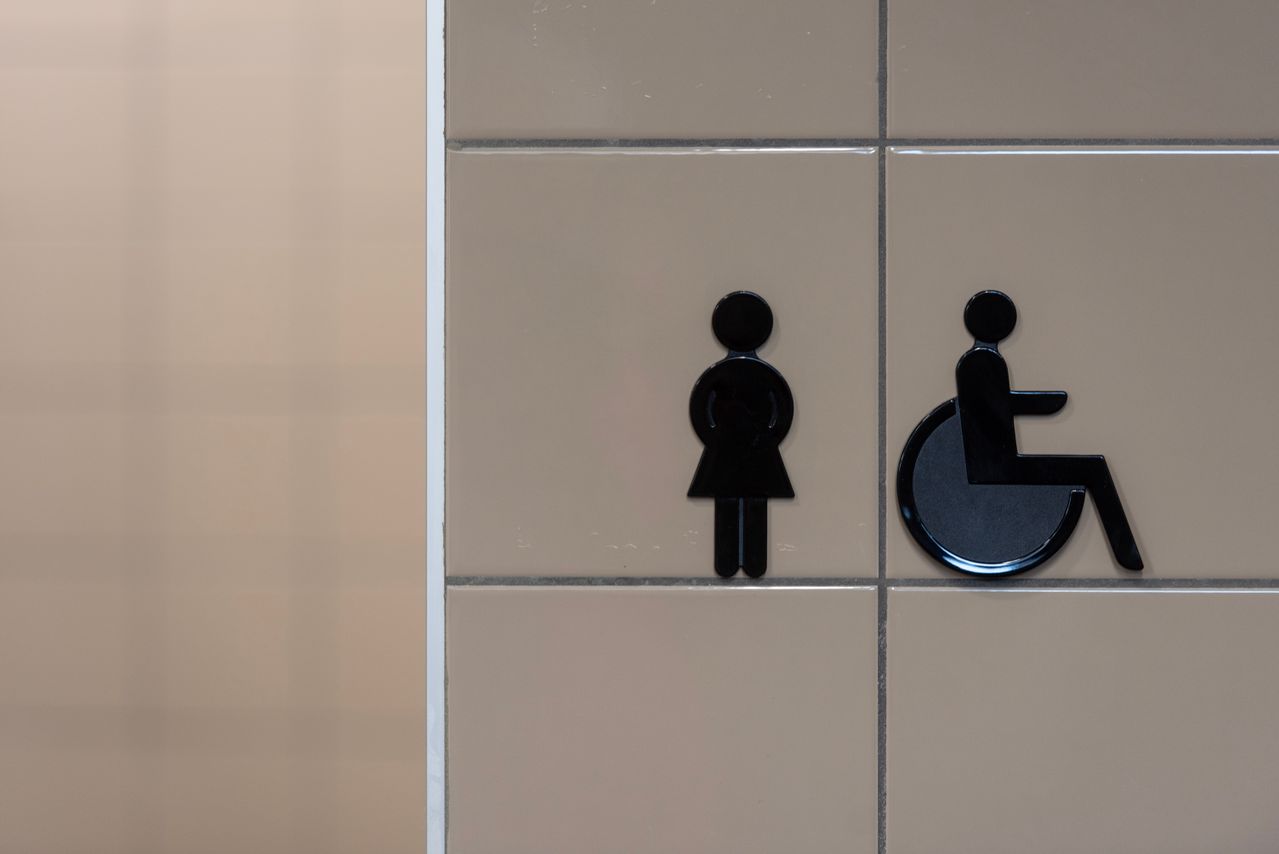
Accessibility is a fundamental issue that companies should take into account—not only for their employees, but also for their customers, suppliers, and anyone else who visits their facilities. Given this, investing in accessibility goes beyond the interests of a few and can have a positive impact on the lives of many.
For this reason, at the corporate level, this is an issue that should be given even greater priority. So, if you’ve started to notice that there are areas within your company that aren’t equally optimized for everyone and you want to begin making significant changes, you need to seriously consider investing in accessibility.
What does it mean to invest in accessibility in the business world?
When you set out to assess a company’s accessibility on the ground, the first thing you notice is that the problem often lies not in what the regulations stipulate, but in how the space is actually used in day-to-day practice.
In this context, it is a mistake to think that investing in accessibility is merely a matter of “adapting a building,” because it also requires examining how that space functions for real people. Whether it’s an older person who hesitates before crossing the lobby, someone with a cane who avoids a certain area because the pavement feels unstable, or a visitor who can’t find the accessible entrance because it’s poorly integrated into the main route.
Accessibility as a strategic investment, not an expense
A large majority of companies tend to treat accessibility as one of their lowest priorities—something they can put off until later, without setting a specific timeline for action. However, when accessibility is integrated from the start, the space is completely transformed.
And this isn’t because it’s filled with special features, but because it eliminates uncertainty. People don’t have to think about where to enter, how to find their way around, or whether they’ll be able to navigate a slope. In everyday life, that translates to something very simple: less friction—and friction is what determines whether a space works well or poorly.
Direct impact on the customer and user experience
At the end of the day, the actual users of your spaces won’t remember whether or not you comply with regulations; they’ll focus on how they feel as they move through your spaces and whether they found it comfortable or difficult. For example, they’ll likely remember whether access was easy or if they had to ask for help, whether they were able to move around independently or had to rely on someone else, and whether the space felt intuitive or made them feel unsafe.
Problems arise when inconsistent situations occur—such as when a company provides excellent service, but physical access is so confusing or complex that users form a negative impression right from the start. And this isn’t because of the service itself, but because of the journey leading up to it. Accessibility comes into play right there, in that invisible part of the experience.
Improving Corporate Reputation and Brand Image
Reputation isn’t built through words; it’s built during the first physical interaction. An accessible building conveys something that can’t always be explained in words: order, foresight, and care for those who use it. And that is perceived even without the user consciously thinking about it.
Real Benefits of Investing in Accessibility in Physical Spaces
When you work on-site, you quickly see what changes and what doesn’t. In this sense, accessibility isn’t just theoretical—it’s also evident in how people move through a space. Furthermore, major renovations aren’t always necessary to see improvements; sometimes all it takes is adjusting pathways, removing poorly placed obstacles, or improving signage for everything to start functioning differently.
Greater independence and comfort for everyone
One of the most obvious changes is autonomy. People who used to ask for help constantly are now beginning to get around on their own. Not because they have changed, but because the space no longer presents them with unnecessary obstacles.
This is particularly noticeable among older adults, since when an environment is accessible, they stop avoiding it and start using it again. Without a doubt, this has a direct impact on their daily lives. Independence here is not an abstract concept; it means being able to enter, find one’s way around, and leave without depending on anyone.
Reducing Architectural and Functional Barriers
The most problematic barriers aren’t always obvious. Sometimes it’s not a staircase, but an impossible turn in a hallway or a door that’s technically accessible but located in a spot that forces you to walk halfway across the building.
In the real world, this is often seen in spaces that “meet the requirements” but don’t function well. That’s why investing in accessibility means addressing these kinds of inconsistencies. Not all of them require construction work; many simply require rethinking how the space is actually used.
Adapting to a More Diverse and Aging Society
Understanding that every user has a different profile is a fundamental part of making spaces socially inclusive, and today this is even more relevant because there is far greater functional diversity, an aging population, and more temporary situations of reduced mobility than we tend to assume. Therefore, designing for an “ideal” user alone no longer makes sense. The spaces that work best are those that adapt to this diversity without forcing anyone to make extra effort.
How does investing in accessibility impact business growth?
That said, of course, investing in accessibility has a real and positive impact on companies and their business growth. After all, this is because accessibility not only improves a space but also changes how it is used and who uses it. Therefore, starting to invest in it can lead to significant changes in:
Expansion of the target audience and new customers
A space with barriers excludes people without saying so outright. People don’t need to make a conscious decision not to enter; they simply stop doing so. But when you remove those barriers, users who weren’t there before start showing up. For example, older adults who now do come, families who find the space easier to navigate, and even users who previously avoided the place because they felt uncomfortable.
Improved customer loyalty and user experience
If there’s one thing that’s crystal clear in the business world, it’s that people return to places where they don’t have to “solve problems.” When the experience of entering and using a space is simple, people have positive memories of it. If it’s complicated, that memory is tainted from the start—even if the service afterward is good.
Differentiation from the Competition
In addition to this, it’s worth noting that in many sectors, accessibility is still not adequately addressed. This creates a clear distinction between companies that prioritize it and those that don’t. And it’s not just an aesthetic difference—it’s a functional one—and it’s evident in how people move through the space. So if you invest in this, you’ll be able to stand out significantly from your direct competitors.
Conclusion
Without a doubt, from a practical standpoint, investing in accessibility is neither a cosmetic improvement nor an administrative requirement. It is a way to ensure that spaces truly work for the people who use them.
When a space is well designed, it’s obvious without needing to be explained: people walk in, find their way around, and use it effortlessly. And in the end, that’s what determines whether a space is well designed or not. That’s why investing in this aspect isn’t a secondary decision— it’s a decision about functionality, experience, and the future.

