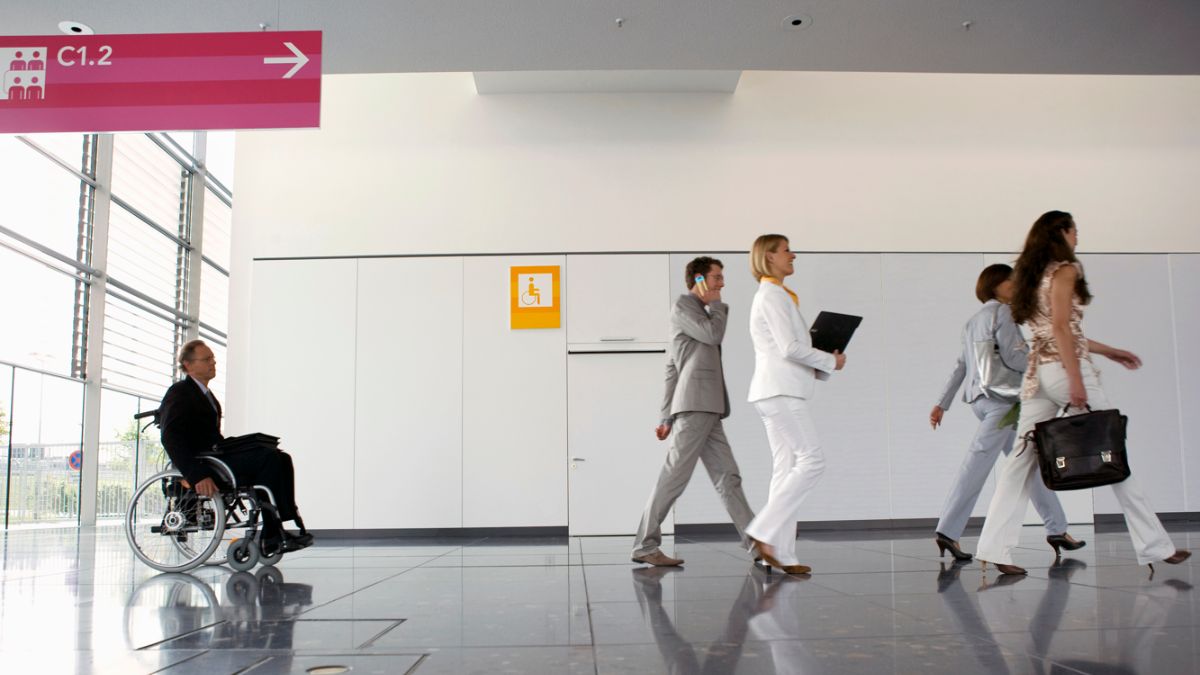
Although in some cases usability and accessibility are terms that are often confused and used for the same thing, the truth is that they are two different concepts. The difference between the two terms is important because it directly affects the autonomy and safety of the elderly, people with disabilities or users with temporary reduced mobility.
There are spaces that meet certain accessibility requirements, but remain uncomfortable or unintuitive in their daily use. There are also places that are seemingly practical for the majority of users, yet exclude those with specific needs. Understanding where usability and accessibility separate helps to create much more humane, comfortable and inclusive environments.
What do usability and accessibility mean in practice?
In physical spaces, usability and accessibility are quickly perceived because they condition the way in which a person moves, orients him/herself and uses an environment. Accessibility focuses on removing barriers that prevent or hinder access. Usability, on the other hand, has more to do with the ease, comfort and logic of use of that space.
Although they are related, they are not exactly the same. A building can have accessible ramps and elevators, but be confusing to navigate. The opposite can also be true: spaces that are seemingly comfortable for most people, but impossible to use for someone who uses a wheelchair or is visually impaired.
What is usability?
Usability in physical spaces has to do with the ease with which a person understands and uses an environment. It depends not only on whether there are accessible elements, but also on how the space is organized and how intuitive the experience is.
This is noticeable in very everyday situations. For example, when a person enters a shopping mall and quickly finds the entrances, elevators or restrooms without the need to constantly ask questions. It also happens in hospitals where the signage is clear and prevents users from getting disoriented or traveling unnecessary long distances.
When usability is poor, the space generates stress and exhaustion. Confusing aisles, poorly visible signs, poorly placed access points or unnecessarily long paths make using the environment require much more effort than necessary.
What is accessibility?
Physical accessibility seeks to ensure that any person can access and move safely and independently within a space. This includes eliminating architectural barriers, adapting routes and facilitating the use of facilities for people with different physical, sensory or cognitive abilities.
However, accessibility is not just about installing a ramp or meeting minimum standards. It also involves thinking about how the elderly, those who use technical aids or those who have difficulties with orientation or comprehension experience the space.
For example, an access with too steep a slope may technically meet certain measures, but still be uncomfortable or unsafe for an elderly person. This is where accessibility ceases to be solely regulatory and becomes a matter of actual experience.
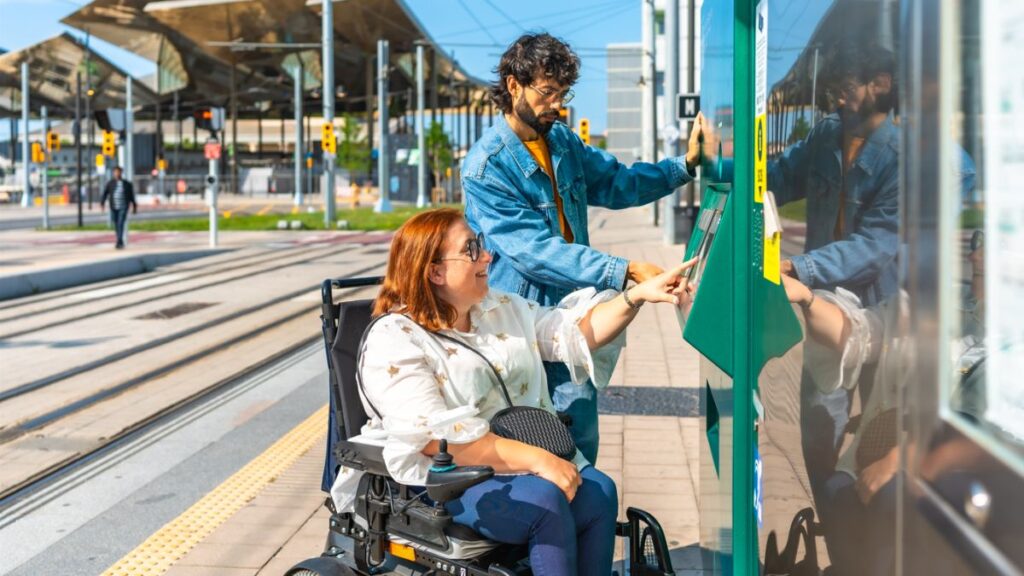
Main differences between usability and accessibility
Although the two concepts often go hand in hand, they respond to different needs. Accessibility focuses on ensuring that the space can be used, while usability focuses on making it simple, convenient and logical to use. This difference seems small, but it makes a big difference in how physical environments are designed and evaluated.
Different but complementary objectives
Accessibility seeks to remove barriers and usability aims to make the experience within the space clear and efficient. A building can be technically accessible and still be tiring or difficult to use.
This occurs, for example, in spaces where adapted access is available, but is poorly signposted or requires excessively long distances. The person can enter, yes, but using the environment is still uncomfortable. When both concepts work together, the result is usually much more natural and functional for all users.
How does each concept affect different user profiles?
On the one hand, it should be noted that accessibility has a particularly important impact on people with disabilities, the elderly and users with reduced mobility. Usability, on the other hand, affects practically anyone who interacts with the environment.
A poorly organized space can cause confusion for any user, but that difficulty is multiplied when there are visual, cognitive or physical limitations. Something as simple as clear signage or a logical layout can make a huge difference.
In fact, many accessibility-related improvements end up benefiting other users as well. A more visible elevator, more comfortable routes or better designed accesses make the space work better for everyone.
Common mistakes when confusing the two terms
One of the most common mistakes is to think that complying with regulations automatically guarantees a good user experience. Another common one is to focus only on removing visible barriers, neglecting how the space is actually experienced.
There are buildings that incorporate accessible solutions only because they are mandatory, but without integrating them logically into the environment. The result is often impractical: secondary entrances for people with reduced mobility, longer routes or signage that is difficult to identify. When accessibility is approached solely on the basis of technical compliance and not on the basis of human experience, problems of this kind arise.
Why should usability and accessibility work together?
In physical spaces, separating usability and accessibility often leads to uncomfortable or inefficient environments. A truly inclusive place not only allows people to enter, but also to move around, understand the environment and use it with autonomy. For this reason, more and more organizations understand that both concepts should be part of the design from the beginning and not added as later corrections.
Impact on the physical experience and autonomy of individuals.
The relationship between accessibility and physical experience is much deeper than it seems. For many older or disabled people, small details can determine whether a space is comfortable or tiring.
A door that is too heavy, a slippery floor or an inconspicuous sign can become major obstacles in everyday life. When the environment is well designed, people move around more safely and with less dependence on others. This has a direct impact on autonomy and quality of life.
Benefits for companies and organizations
Accessible and usable spaces also bring clear benefits to companies and organizations. A comfortable, clear and user-friendly environment improves the perception of the service and conveys a more professional and human image.
In addition, it facilitates access to more people and reduces awkward situations or difficulties during customer service. In sectors such as hotels, retail, healthcare or public buildings, this has a direct impact on the user experience.
The importance of designing for diversity
Not everyone navigates or interprets a space in the same way. Some need more time to orient themselves, others require physical aids, and still others rely on clear visual cues to move around safely.
Designing with this diversity in mind not only improves inclusion, but often results in much more comfortable and functional environments for everyone. Clearer spaces, intuitive paths and easy access benefit all users, regardless of their abilities.
Conclusion
Understanding the differences between usability and accessibility is critical to designing physical spaces that really work for people. It is not enough to remove visible barriers; the environment also needs to be clear, comfortable and easy to use on a day-to-day basis. Working usability and accessibility together allows us to create more humane, inclusive and safe spaces for the elderly, people with disabilities and all users.

