Accessibility is usually associated with the elimination of architectural barriers or mobility, but there are many other needs that must be taken into account in order to build truly inclusive environments. Among them are those of ostomates, a group whose daily difficulties remain largely unknown to society.
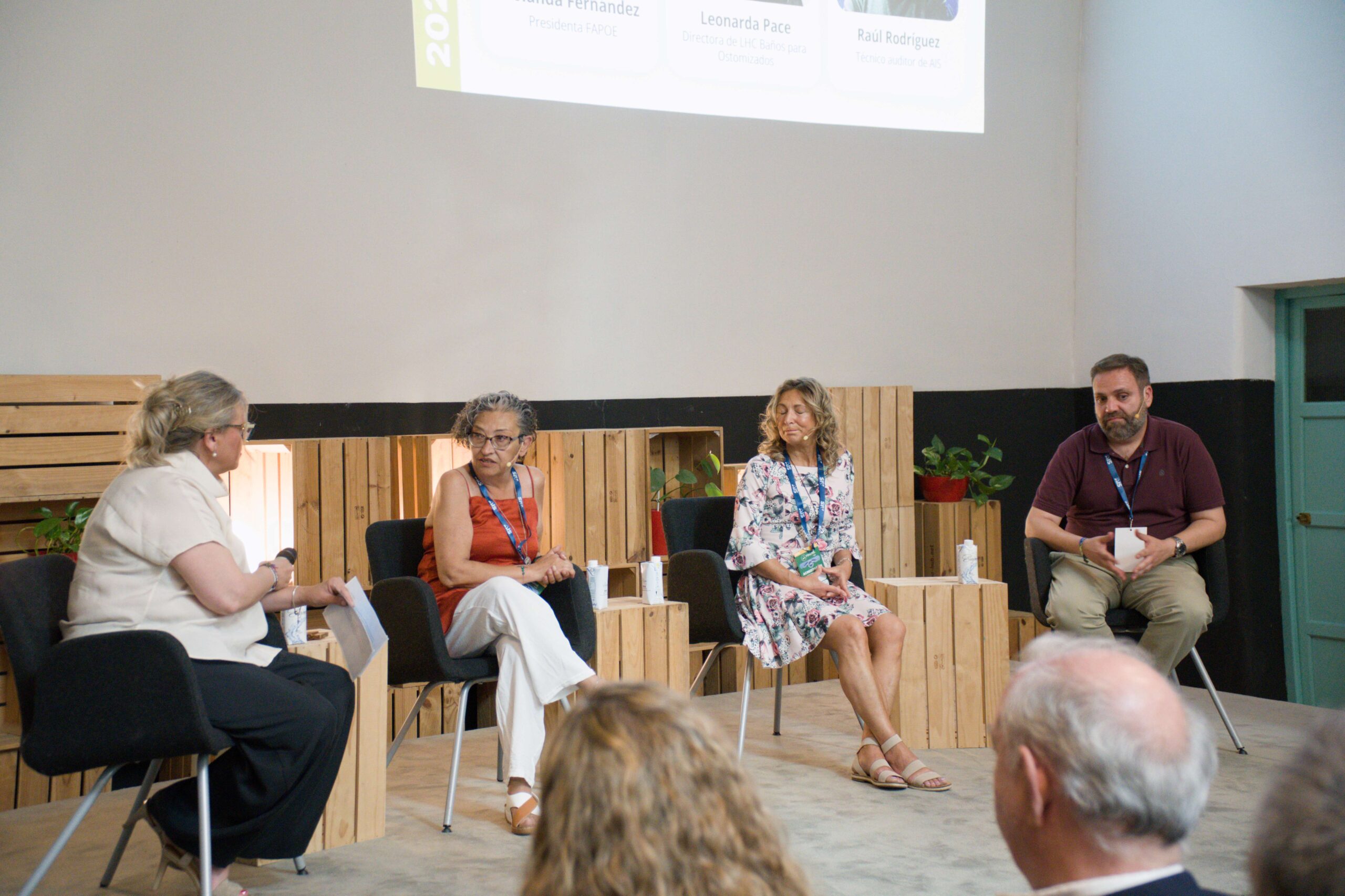
With the aim of delving deeper into this reality, within the framework of Around 2026, we held the round table “Ostomized people, their accessibility needs and how the legislation reflects it”, with the participation of Esther Bienes Pinedo and Raúl Rodríguez Braojos, from Fundación ARS; Yolanda Fernández, from the Federation of Associations of Ostomized People of Spain(FAPOE); and Leonarda Pace, from LHC Baños Ostomizados.
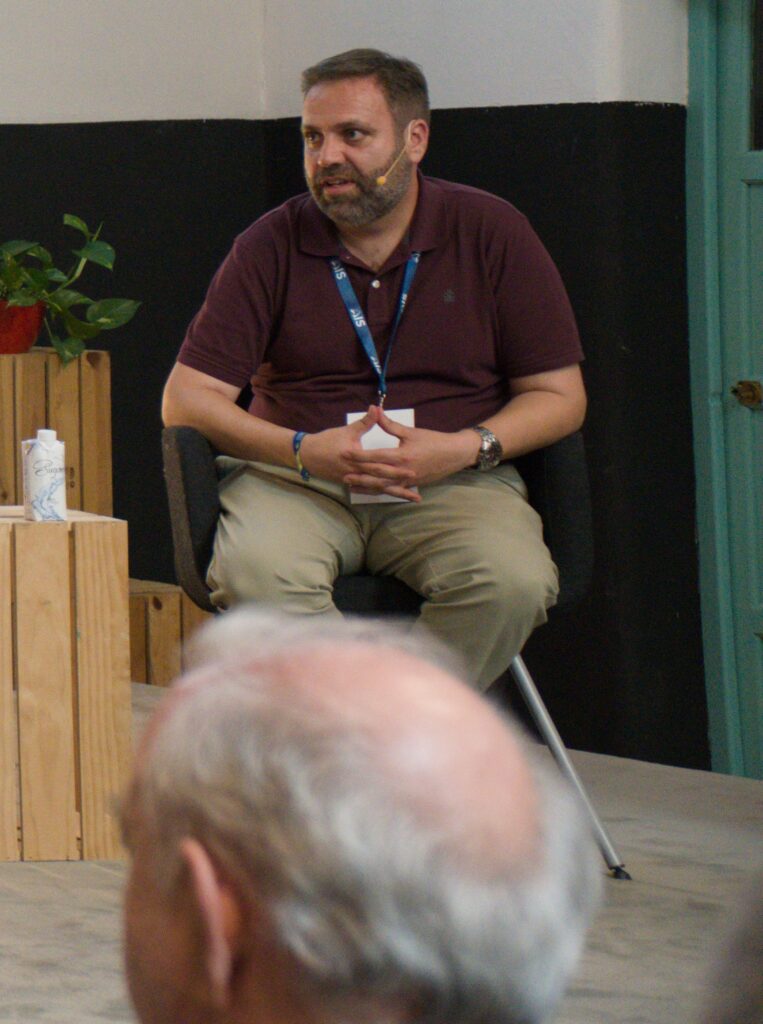
Accessibility begins with understanding the needs of ostomates.
One of the central messages of the session was that accessibility cannot be approached solely on the basis of technical or regulatory criteria. To be effective, it must be based on knowledge of people’s real needs.
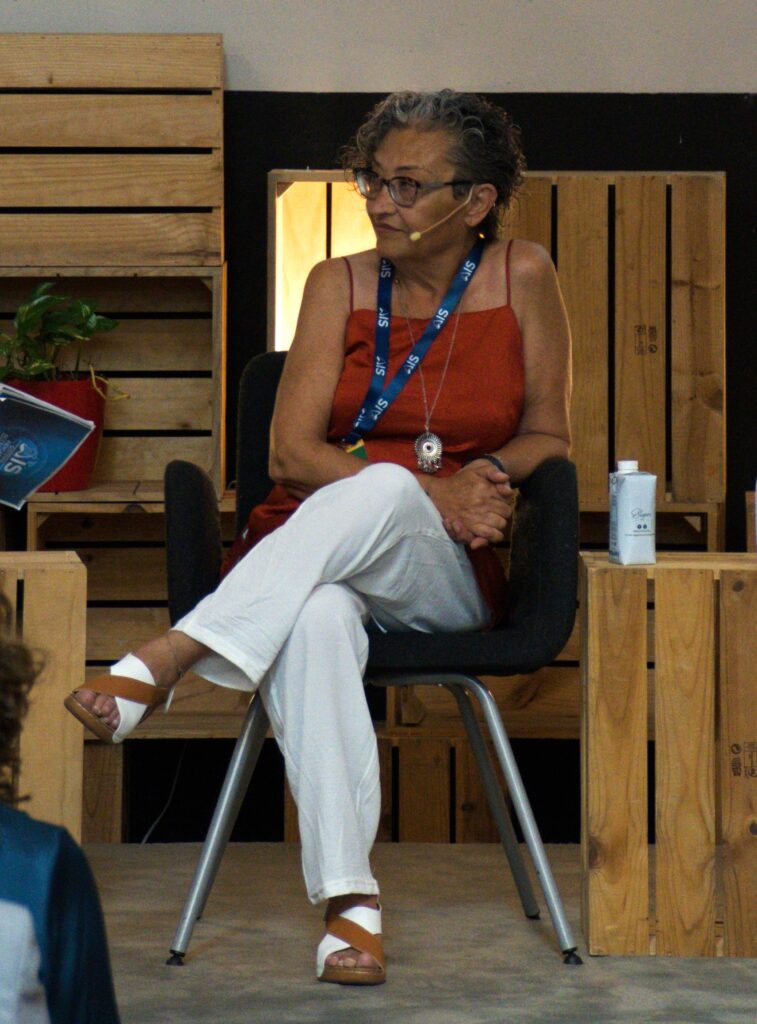
In this regard, Esther Bienes Pinedo stressed that “this is how accessibility should be treated, based on the needs of the people”. Yolanda Fernández, for her part, explained what an ostomy is and shared the difficulties that many ostomates encounter in their daily lives when they do not have adequate spaces for the care and emptying of their pouches.
The lack of adapted facilities limits the autonomy of many people and can condition something as everyday as going to a museum, enjoying a cultural activity, traveling or spending several hours away from home.
For this reason, toilets for ostomates are an essential accessibility solution. Specifically designed to facilitate the emptying, rinsing and changing of the pouch in conditions of comfort, hygiene and safety, they respond to a need that is not usually contemplated in public spaces.
As Yolanda Fernández recalled, “the fact of having toilets for osmosis people covers a basic need of all people: to be able to go out to museums, to the cinema, to travel, in short, to leave the house with peace of mind”.
From regulations to people’s experience
Another aspect highlighted was the need to incorporate the voice of associations and affected persons in the development of accessibility regulations and criteria.
Raúl Rodríguez Braojos underscored this idea by stating that we learn much more by talking to the people and those affected, because we see beyond the technical and architectural aspects.
Raúl also pointed out that “Colombia, Uruguay and London are already taking steps to include in their legislation the mandatory construction of osmosis toilets”, an example of how accessibility continues to evolve in response to increasingly diverse realities.
However, the discussion focused on the approval of the modification of the Spanish Technical Building Code, which provides for a more exhaustive development of toilets for ostomates.
Accessibility, dignity and inclusion
The round table concluded with a reflection shared by all participants: accessibility is a matter of rights, dignity and inclusion.
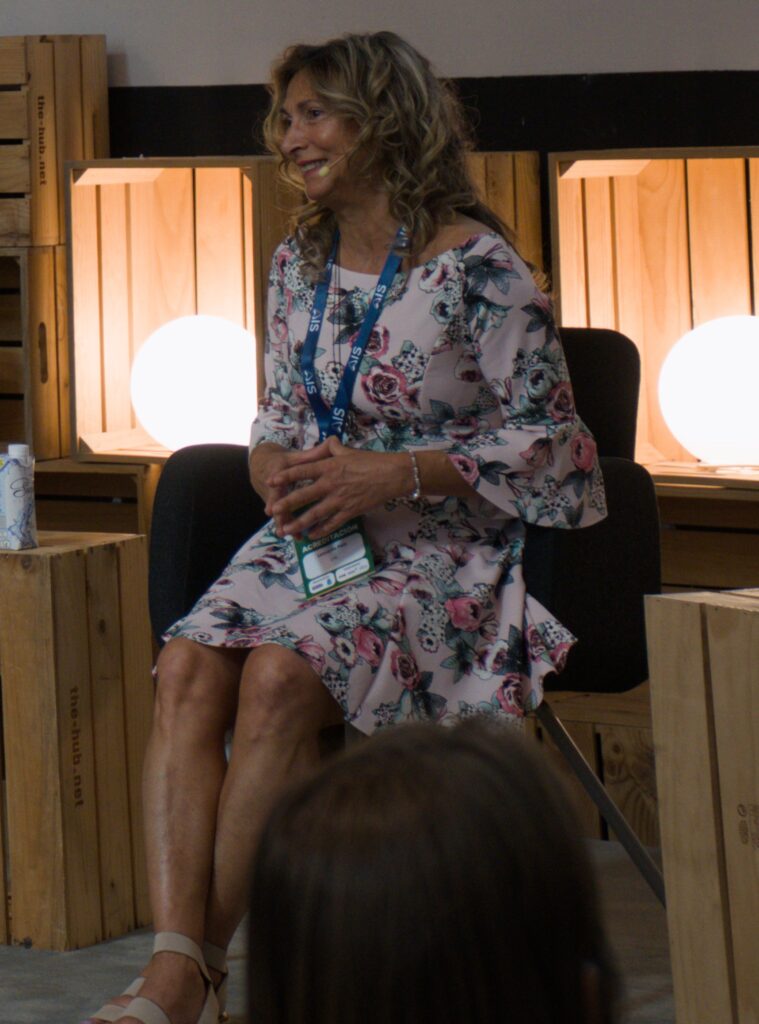
In this regard, Leonarda Pace recalled the importance of developing quality solutions that adequately meet the needs of the group: “We must do things right: install user-friendly toilets that comply with regulations and use non-porous materials that do not transmit bacteria. Because, as she pointed out, “we have to preserve the dignity of osmotized people”.
Ostomy and AIS toilets
The AIS accessibility certificate already includes evaluation requirements for bathrooms for ostomates in its AIS 1/2023 Standard. Specifically, it incorporates a total of 45 specific requirements that analyze aspects such as the existence of a hand shower with a trigger, the water temperature and the height at which the toilet is located, among many others.
Recognizing the needs of ostomates and taking them into account in the design of public spaces means moving towards a more complete, more humane and more inclusive accessibility. An accessibility that leaves no one behind and understands that the diversity of people also requires a diversity of solutions.

